Objects of Desire
Steel, glass and a fortune from Sumatra: Zurich’s houses worth the detour
Le Corbusier’s last building, a villa with a colonial past and two towers in Zurich West.

Photo Credit
Image courtesy of © JoachimKohler-HB · CC BY-SA 4.0 via Wikimedia CommonsZurich’s most remarkable buildings are not hidden behind gates. Le Corbusier’s last work stands in a lakeside park, a lavish villa of 1885 now tells its own colonial story, and in Zurich West a green glass tower and a stack of freight containers argue about what a landmark should be. No prices, only buildings, and why each one is worth the detour.
Le Corbusier’s last word
Zurich keeps its most extraordinary houses where you can walk up to them. At the Zürichhorn, behind enamelled panels of red, yellow, green and black under a floating steel roof, stands the Pavillon Le Corbusier: the architect’s last building, and his only one made of steel and glass. It is a long way to come for a final word, and he made it count.
The pavilion was Heidi Weber’s idea: she commissioned Le Corbusier and oversaw the building to its completion in 1967. Since 2019 the Museum für Gestaltung has run it as a public museum for the City of Zurich, with a new exhibition every year on a facet of his work, and a visit becomes an architectural promenade from floor to floor. It closes for the winter, from December 2026 to April 2027.
A villa from Sumatra
A short walk inland, the Villa Patumbah tells a more complicated story. The merchant Carl Fürchtegott Grob had it built in 1885 by the Zurich architects Alfred Chiodera and Theophil Tschudy, who combined the Renaissance, the Rococo and Asian art into one opulent whole; it was among the most expensive private houses in Zurich.
The money came from far away. Grob had lived on Sumatra from 1869 to 1879 and grew rich on tobacco plantations, and the Swiss Heritage Centre, which now occupies the villa, says plainly that the house bears witness to Switzerland’s colonial entanglements and to the thousands of workers employed on the plantations in precarious conditions. It is a beautiful house that does not pretend to be innocent.
After Grob’s death his widow and daughters gave the villa in 1911 to the Diakoniewerk Neumünster, which ran it as an old people’s home for decades; when demolition plans became known in the 1970s, the city took it over.
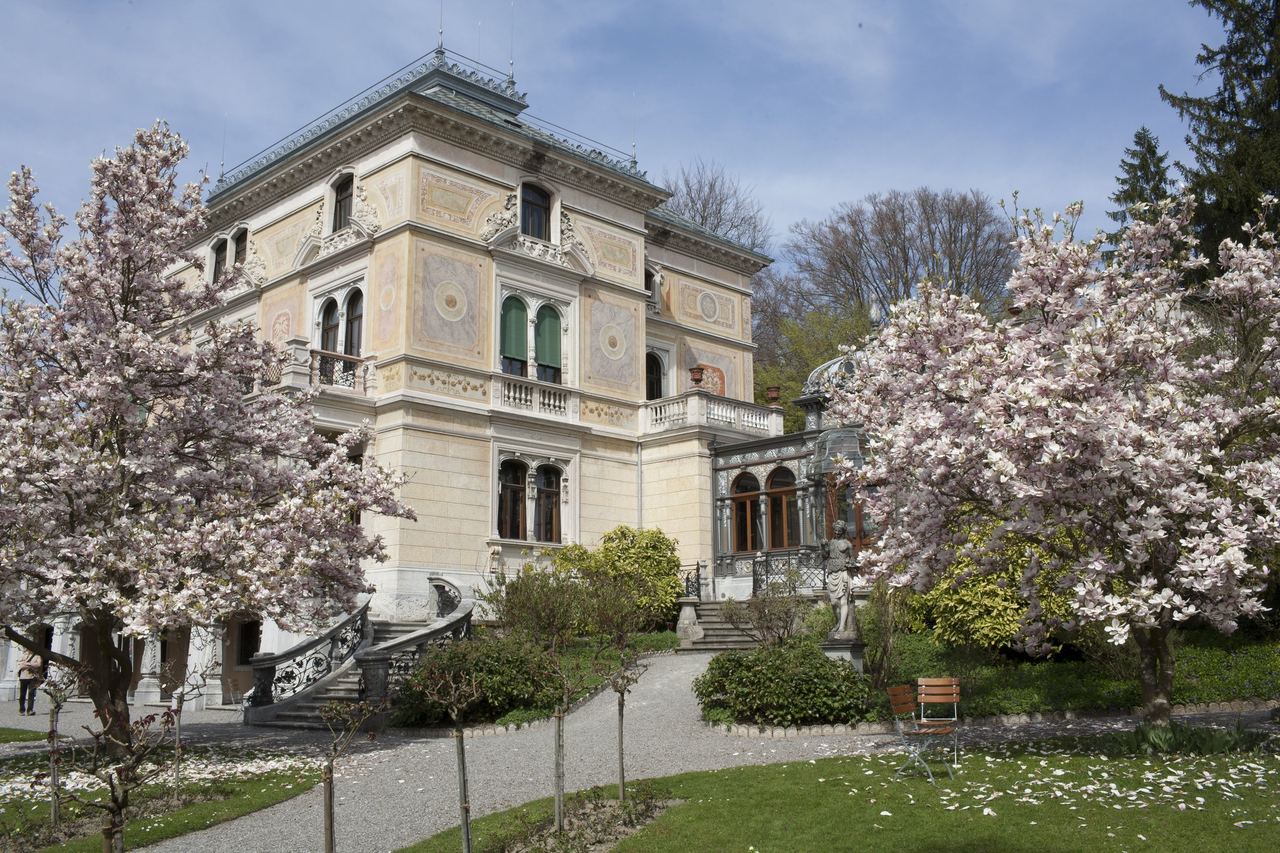
Photo Credit
Image courtesy of © Villa PatumbahIts park, designed in 1890–91 by Evariste Mertens as an English landscape garden, has been reconstructed to the original plan and is open to the public; new buildings by Miller & Maranta on the private part of the grounds were set in so that the old garden plan could return. On the ground floor the Heritage Centre shows exhibitions on building culture, and the Asian gallery upstairs can be seen on a guided tour.
It is a beautiful house that does not pretend to be innocent.
Rising in the west
In Zurich West the city goes up. The Prime Tower, by Gigon/Guyer, rises 126 metres over 36 storeys beside Hardbrücke station, the landmark of the growing business quarter, its green glass catching the evening light.
A few minutes away, the Freitag Tower makes the opposite argument: completed in 2006 from rusting freight containers stacked 26 metres high, it sells bags made from old lorry tarpaulins in a building made from old freight. Zurich, it turns out, recycles even its landmarks.
Inside the Prime Tower are some 40,000 square metres of floor space and room for 2,000 workplaces, with Clouds, the bar and restaurant on the 35th floor, for anyone who prefers their architecture with a view. The Freitag Tower’s roof terrace, by contrast, looks back over the former industrial quarter that both towers have replaced: shipyards and engine works, now offices, galleries and coffee.
Our advice: there are no prices here, only buildings. Walk the Seefeld for the pavilion and the villa, remembering the pavilion’s winter closure, then take the train to Hardbrücke for the towers, and climb to the Freitag Tower’s roof for the view over the former industrial quarter.
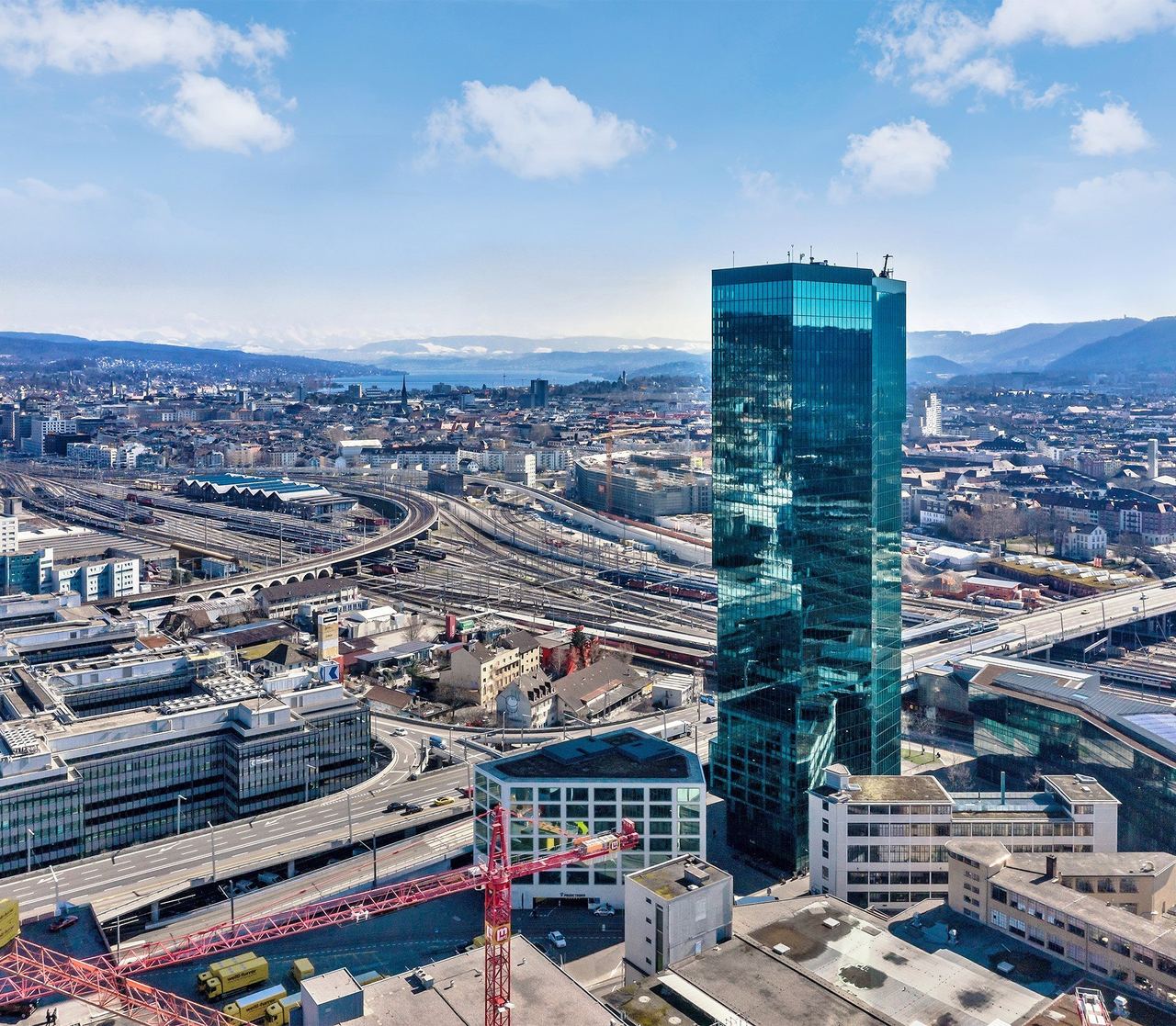
Photo Credit
Image courtesy of © Prime TowerWhy it's on our list
- Le Corbusier’s last word
- A villa from Sumatra
- Rising in the west
Location
The map comes from Google Maps, which sets its own cookies once it loads.
More in depth
 Objects of DesireSans pareil: the Kronenhalle Bar, a library of spirits and the Old FashionedA bar with Giacometti lamps and no music, 1,000 bottles on the Rennweg and the Old Fashioned.
 Objects of DesireLess parked than crouched: the electric Jaguar and the new supercarsJaguar’s Type 00 and Type 01, Ferrari’s first electric car and the record-breakers around them.
 Objects of DesireBrahms on the bill, ships in the cellar: how Zurich learned to listenA lakeside hall Brahms opened, jazz in a shipyard and a listening bar with its own vinyl shop.